

Swimwear is no longer just a seasonal segment. Now it’s a year-round fashion segment fueled by travel, wellness trends, and social media influence. All the global markets, from beachwear and resort collections to active swimming, are still experiencing rising demand.
This is a huge opportunity for new founders. But it is also fierce competition. Jumping into the market without a clear strategy can lead to wasted budget. It can also lead to brand dilution and slow growth.
A lot of new swimwear brands begin with a great design concept. But soon I learned that product development, sourcing, pricing, and production planning are just as important as creativity. A structured plan helps founders avoid common mistakes and better allocate resources.
A good swimwear business plan will help you to avoid these problems. It shapes and limits costs. Also, it allows better decision-making at each step. This guide manual will give you a practical 12-step process to guide you with confidence and clarity on building, launching, and growing your swimwear label. And how Swimtix can be your trusted apparel manufacturing partner.
Step 1 – Establish Your Swimwear Brand Vision & Goals
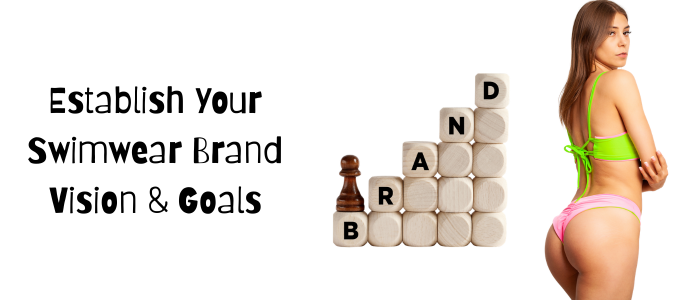
First, you should have a clear direction for your brand. This is the basis of your entire swimwear business plan.
- What does your brand represent?
- Who is this for?
- What do you see yourself doing in the next 2-5 years?
Your brand direction will affect everything from design to pricing to marketing to manufacturing.
Things to define:
- Brand purpose and values
- Price points to hit (budget, mid-range, premium)
- Product focus (fashion/performance/modest/sustainable)
- Short- and long-term objectives
Know why. What your brand does, and why does it even exist? For example, you may want to work on size-inclusive swimwear, performance design, or fashion-focused beachwear.
What are your long-term and short-term goals?
Your short-term goal could be to launch your first collection or get a certain number of sales.
Long-term goals may include accessing global markets or moving into new product categories.
and select your brand positioning:
- affordable, available
- mid-range and trend-driven
- Luxury or high-end premium
Set achievable, quantifiable goals. That clarity will help guide your decisions on design, pricing, and marketing.
Example:
For instance, a founder might choose to launch a sustainable swimwear brand that uses recycled materials and targets environmentally conscious consumers aged between 20 and 35.
Clear goals lead to consistent decision-making as the brand grows.
Step 2 – Know Your Target Market & Customer Profile
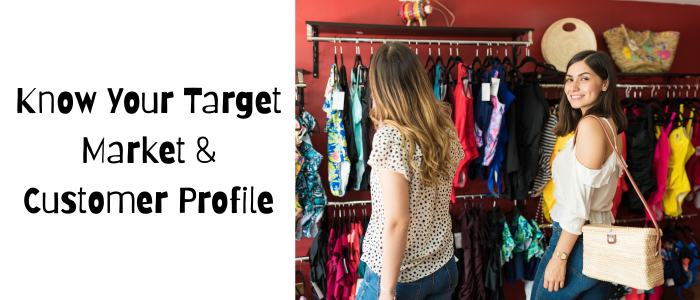
A good swimwear business plan will help you to avoid these problems. It shapes and limits costs. It is aimed at a certain audience.
Start with the basics, demographics:
- Age group
- Place
- Level of income
Demographic information provides the starting point. Consider factors such as age, location, and income level before moving on to behavioral and lifestyle traits.
Then think about lifestyle:
- Travel behavior
- Exercises
- Fashion sense
Understand purchasing behavior:
- Where They Buy
- How frequently do they purchase swimwear
- What drives their choices (price, quality, trends, sustainability)
Develop a detailed customer persona. This step makes sure your product and messaging are aligned with what your customers really want.
Example:
Instead of “all women,” define a more specific persona:
Women in cities, 25-40 years old, travel a lot, shop online, and prefer less, high-quality swimwear.
Knowing your audience helps you:
- Build better products
- Select the right price point
- Develop successful marketing campaigns
Step 3 – Pick Your Swimwear Niche
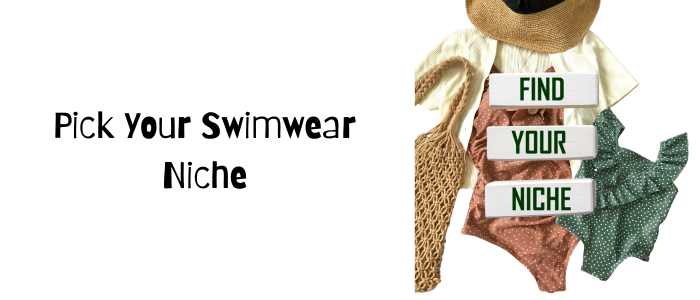
The swimwear market is broad. By picking a niche, your brand can distinguish itself from the crowd. Instead of giving everything, focus on a category. This builds a strong identity and draws a loyal audience.
Popular niches are:
- Bikinis & Swimwear Fashion
- One-piece and shapewear swimwear
- Swim Cover-ups
- Active swim (performance swim)
- Luxury Swimwear
- Eco-friendly swimwear
Swimwear brands are often specialized in a specific category. Instead of trying to serve all customer segments. Some of them are dedicated to fashion bikinis; others develop collections. These collections include active swimwear, modest styles, shapewear-inspired styles, luxury products, and sustainable fabrics.
Evaluate your niche on demand and competition.
Ensure that there is enough market interest but also room for differentiation.
Before finalizing your niche, it is also worth understanding the different categories. Also, what styles are available in the industry? Read our blog to explore popular swimwear segments and market opportunities.
Example:
A small swimwear brand can focus on full-coverage styles in lightweight, quick-dry fabrics. This niche has less competition than the traditional bikini market.
Having a clear niche makes it easier to attract the right customers and position your brand how you want.
Step 4 – Swimwear Market & Competitor Analysis
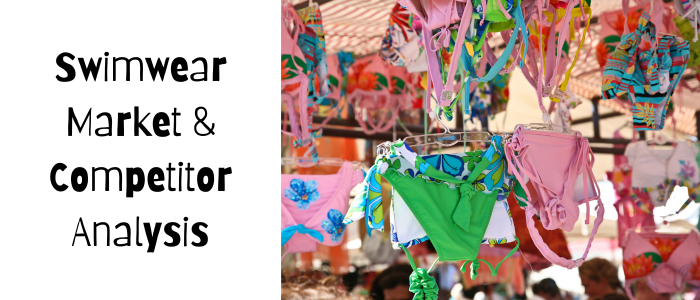
It is imperative to do research before investing.
Study current market trends:
- Popular Colors & Prints
- Popular styles and silhouettes
- Innovations in fabric
Then analyze your competitors
- Their rate structure
- Range of products
- Brand positioning
- Customer reviews
Pay attention to what customers say. Reviews frequently note what customers appreciate and what they hope to see better.
Identify gaps in the market.
Customers may want better fit, more sizing options or better quality fabric.
Let this insight inform you of your product and brand strategy.
Example:
A luxury swimwear brand could choose neutrals, a subtle logo, and premium packaging. A new brand may want to make bright colors and fun messaging.
When customers experience the same visual style, tone, and messaging at every touchpoint, they’re more likely to remember the brand and come back for more.
Step 5 – Building a Strong Swimwear Brand Identity
Your brand identity is how customers know and remember you.
Things to develop:
- Trade name
- Logo
- Color scheme
- Voice tone
- Packaging Style
Ensure consistency across your website, social media, and product labels.
Example
A luxury swimwear brand could choose neutrals, a subtle logo, and premium packaging. A new brand may want to make bright colors and fun messaging.
When customers experience the same visual style, tone, and messaging at every touchpoint, they’re more likely to remember the brand and come back for more.
Step 6 – Create Your Swim Line
Your first collection should be a small, focused one. Choose a collection that is aligned with your niche and your customers’ needs. Start with
First plan:
- Styles number
- Varieties of colors
- Size range
Prioritize quality over quantity. Better a small, well-designed collection than a large unfocused one.
Pay attention to:
- Comfort and Fit
- Support & structure
- Functionality (particularly active swimwear)
Use trend research as a guide but stay authentic to who you are.
Product development often starts with proper sampling and fit testing. Learn more about our Swimwear Customization Services and how prototypes help refine fit before bulk production.
Example:
Instead of launching 20 designs, begin with 5-8 strong styles in a range of colors. This lowers the risk of production and makes inventory management easier.
Swimwear fits everything. A poor fit leads to high returns and bad reviews. Always prioritize comfort and support.
Step 7 – Sourcing Fabric & Choosing Material
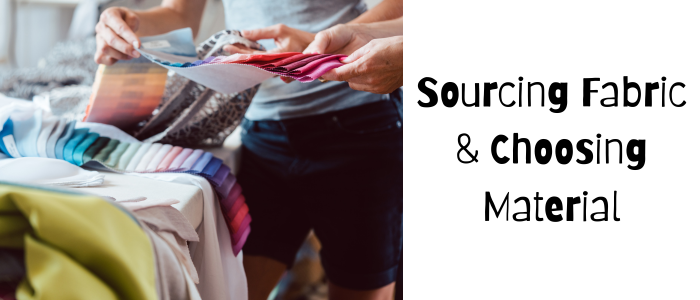
The choice of fabric directly affects the quality and performance of the product and the positioning of the brand.
Common swimwear fabrics:
- Nylon/spandex blends (stretch & strength)
- Polyester blends have fading and chlorine resistance
- Eco-friendly options (recycled fabrics)
What to verify:
- Stretch & Recovery
- Fastness to color
- Cling Resistance to saltwater and chlorine
- Opacity and thickness
Example:
A brand for active swimmers would want to use chlorine-resistant fabric, while a fashion brand might focus on softness and aesthetics.
Choosing the right material means fewer product problems and happier customers.
Step 8 – Selecting the Top Swimwear Manufacturer

Your manufacturer is a key factor in product quality, and the right manufacturer is a key factor to your success.
Manufacturers evaluated by:
- MOQ (Minimum Order Quantity)
- Sampling capabilities
- Communication and responsiveness
- Standards for quality
- Production time frames
Flexibility is necessary for new brands. With low MOQs, you can experiment with products without a large upfront investment.
Sampling is also especially important. It lets you work out design and construction. Before you go into mass production.
Swimtix supports swimwear startups with dedicated development services such as sampling, fit adjustments, and consistent production quality. This reduces risk and gives brands the confidence to launch their swimwear line.
If you’re evaluating production partners, check our Swimwear Fabric Library and how we support emerging brands from development to bulk production.
Real-World Case Scenario:
Imagine a brand investing in 1,000 units before testing fit with real customers. If sizing issues appear after launch, the cost of correcting those mistakes can be substantial. This is why many startups spend more time on sampling before committing to larger production runs.
For example:
Many first-time founders discover that ordering too much stock too early ties up cash that could be used for marketing. Low-MOQ production helps reduce that risk while demand is still being validated.
Working with a swimwear manufacturer that has experience also helps to refine designs, improve fit, and avoid costly mistakes.
Swimtix supports startups with specific swimwear development, advising on materials, fit and production planning.
Step 9 – Pricing & Costing Strategy

If you know exactly what things cost, you can be sure your business is making money.
List all costs:
- Fabrics and trimmings
- Cost per unit of production
- Shipping & Logistics
- Advertising expenses
Once you have the total cost, choose your pricing.
Think about:
- Your target market’s buying power
- Competitor Prices
- Positioning of the Brand
- Most swimwear brands mark up between 2.5x and 4x.
Your prices must cover your costs and allow for profit and future growth.
Example:
Production cost is about $20 per piece; depending on brand positioning, a retail price of around $60-80 can be expected.
Do not underestimate. It can slow growth and lower the expected value.
Step 10 – Production Inventory & Planning Strategy

Careful planning means less waste and more efficiency.
Begin with:
- Final sample sign-off
- When was it created?
- Order Amounts
Market research and early response will forecast demand. If in doubt, start small with production runs. It reduces risk.
You can also pre-sell to validate demand before making bulk. And you can also find a balance there with having enough stock, but not too much stock.
Example:
A new brand can also run pre-orders to evaluate demand before full production. This reduces the financial risk.
Also check out:
- Delivery times
- Storage capacity
- Demand by season
Efficient planning means smooth operations and better cash flow.
Step 11 – Sales and Marketing Strategy

A good marketing strategy is needed to get visibility and sales.
Main channels:
- Direct-to-consumer website
- Sites on social media
- Partnering with influencers
- Advertised (paid)
Many swimwear startups grow by partnering with influencers. Sending products to micro-influencers creates authentic content & builds trust quickly.
Example:
- Good quality images
- Regular Posting
- Direct communication
Your marketing should mirror your brand identity and communicate directly with your target audience.
Step 12 – Launch, Scale & Optimize

Your launch is only the beginning.
Upon launch:
- Sales performance watch
- Collect customer feedback
- Find top sellers
Use this data to optimize your next collection.
Scaling should be slow. Increase production based on demand, not guesses.
Don’t diversify into new products until your core products are doing well.
Your brand will grow sustainably through ongoing improvements in design and quality.
Example:
If customers complain about sizing problems, revise size charts or modify patterns for the next production run.
Scaling:
- Slowly ramp up production
- Broaden the product range
- Enter new markets.
Understanding Legal & Business Essentials for Your Swimwear Brand
Starting a swimwear business is not just about design and marketing. It’s about having a strong legal and business foundation. Failing to do so can lead to costly mistakes down the line.
Key areas to consider include:
-
Business Registration & Licenses
Choose your business structure (LLC, sole proprietorship, or corporation). And then register your brand legally. Look into any local or state permits needed to sell apparel.
-
Trademark & Intellectual Property
Protect your brand name, logo, and designs. This is to prevent copycats. Trademark registration provides you with legal protection and credibility with retailers and customers.
-
Contracts & Agreements
Lock in manufacturers, influencers, and partners with clear contracts. These contracts must outline pricing, delivery timelines, and ownership of intellectual property.
-
Insurance
Product liability insurance is essential if a product causes harm. Particularly, swimwear is worn in public places like pools and beaches.
Investing time in the legal and business fundamentals of your brand will allow it to scale without disruption and protect your creative assets.
Eco-friendly & Ethical Swimwear Manufacturing Practices
Today’s consumers want brands that care about the environment and ethical production. Sustainability is not an option anymore. It can also set your brand apart in a crowded market through sustainable practices.
Look at these practices:
- Eco-Friendly Fabrics: Recycled nylon or polyester, organic fabrics, and biodegradable packaging help reduce the environmental impact.
- Ethical Manufacturing: Partner with manufacturers who adhere to fair labor practices and safe working environments.
- Waste Reduction: Use digital sampling, made-to-order runs, or pre-orders to reduce overproduction and material waste.
- Transparency: Make sure your customers know what you’re doing for sustainability through marketing, social media, and product tags.
How Swimtix Helps Swimwear Startups
Swimtix works with new and emerging swimwear brands, providing support through each stage of growth.
The key benefits are:
Low minimum order quantities
Perfect for startups testing out new designs without a big upfront investment.
Swimwear-specific sampling & fit expertise
Ensures proper sizing, improved comfort, and fewer product issues.
Custom and Private Label Manufacturing
Brands can develop exclusive collections with complete design and brand control.
Scalability of production solutions
Production can easily be scaled up without any quality issues as the demand increases.
This support allows founders to concentrate on branding and sales with reliable production.
Conclusion:
Making a swimwear brand takes more than good design. It requires structure, planning, and the right partnerships.”
A clear road in this business plan, the swimwear 12-step:
- Build your brand
- Know your market
- Build strong products
- Plan production and pricing.
- Aim the strategy to release
- Improve and scale overtime
Even a small startup can become a strong, competitive brand with the right approach.
Launch Your Swimwear Line with Us
Partner with Swimtix for expert swimwear development and manufacturing.